Characteristics of Temple Food

Korean Temple Food
Characteristics of Temple Food
 Food As Practice
Korean temple food does not use any animal products except dairy products. Korean Buddhism forbids meat.
The Buddha said in the Nirvana Sutra, “Eating meat extinguishes the seeds of compassion.” Buddhism teaches that compassion means to embrace all living beings as oneself.
The dietary culture of Korean Buddhism has always held reverence for life.
Korean temple food has also traditionally meant that monks do not use five pungent vegetables (onions, garlic, chives,green onions and leeks), these are called the "o-shin-chae", because they hinder
spiritual practice.
The prohibition of the five pungent vegetables is a preventive measure to guard Buddhist practitioners from possible distractions during meditation.
In addition, the prohibition is also meant to prevent any attachment to the flavor of strong spices, which may also disturb practice.
These characteristics of temple food show how monastic meals are a means through which Buddhist monks realize the interdependence of all lives and that they must strive to establish a world in which all
live together in harmony.
Natural Food
Instead of artificial flavors, Korean temple food uses a variety of mountain herbs and wild greens, which has led to the development of a vegetarian tradition.
As most Korean temples are located in the mountains, providing easy access to wild roots, stems, leaves, fruits and flowers, monks and nuns have naturally become leaders in shaping vegetarian culture.
Also, natural seasonings and flavor enhancers have been developed.
Examples of common natural seasonings used in temples are : mushroom powder, kelp powder, jae-pi powder, perilla seed powder, and uncooked bean powder.
These seasonings are used when making soup stock, kimchi and vegetable dishes, correcting nutritional imbalance and enhancing flavors.
Having been used in temples since ancient times, these natural seasonings are emerging in modern times as a powerful alternative
Eco-Friendly Health Food
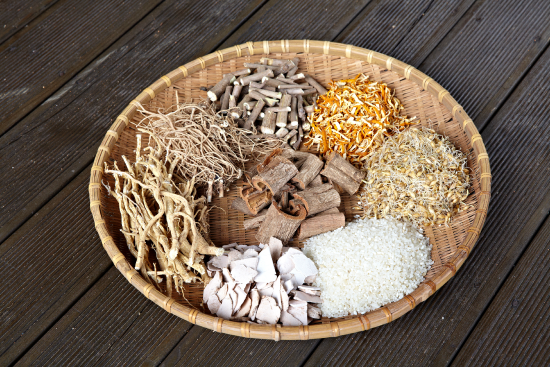
The assorted vegetables and greens used in temple food contain abundant natural fiber as well as carbohydrates and protein.
Korean temple food is rich in various nutrients but low in cholesterol. Although strictly vegetarian, temple food lacks nothing in nutrition. It is advisable for anyone to use any or all of the ingredients
of temple cuisine in everyday life for healthier lives and to prevent age-related health problems.
The popularization of temple food would contribute to a healthier dietary life for Koreans as well as global citizens.